Circularity and the impact of single-use endoscopes
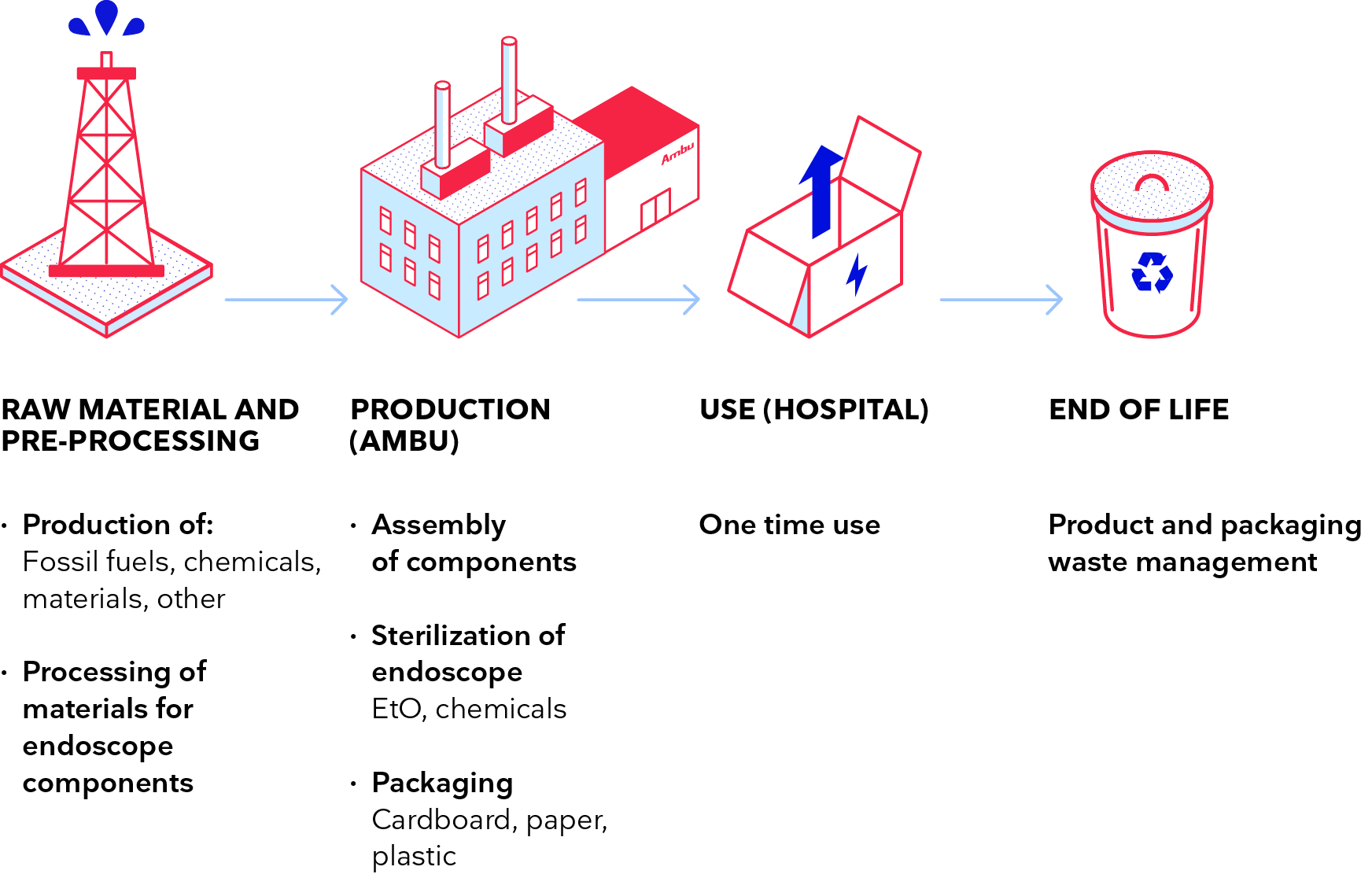
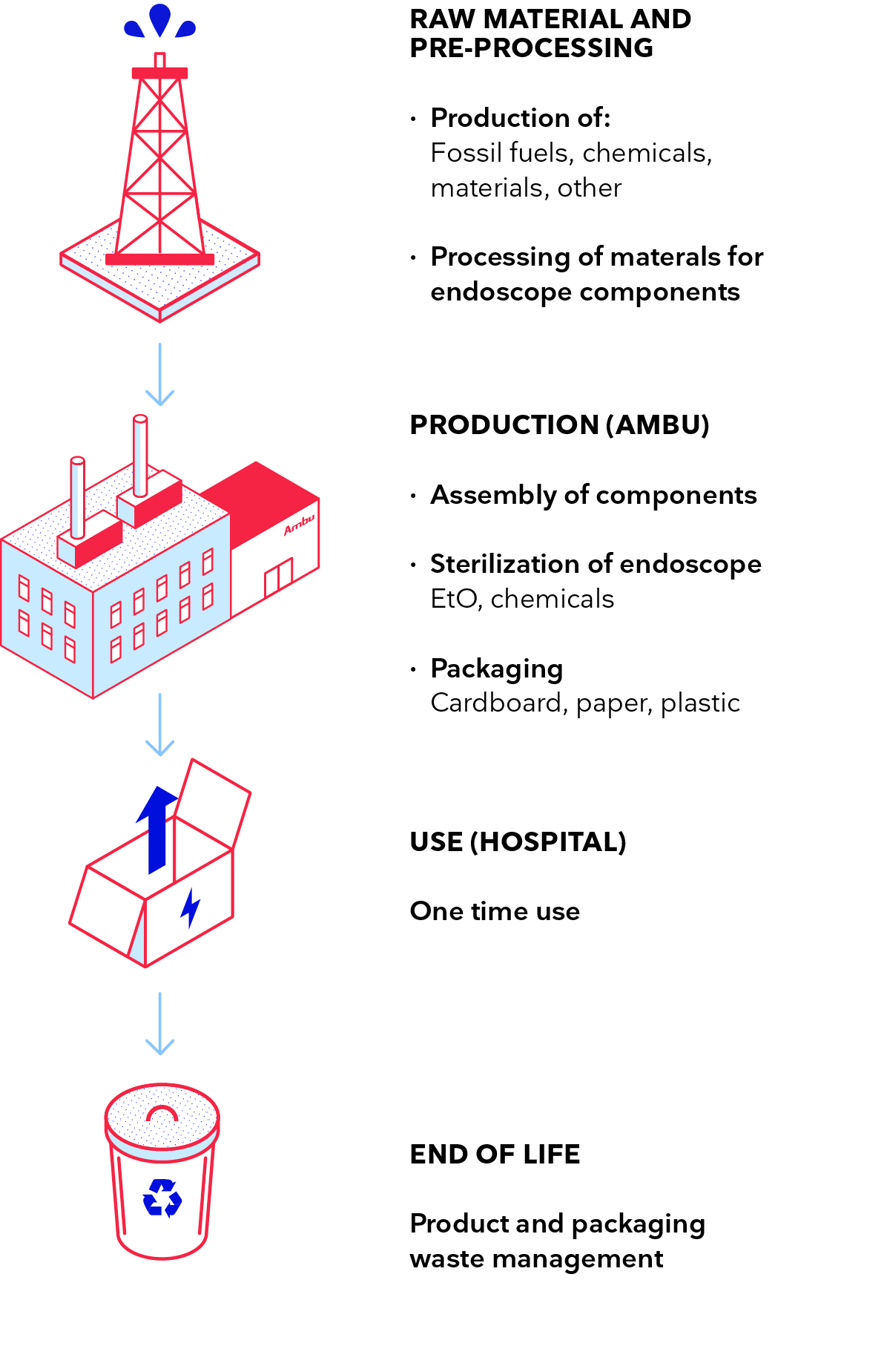
Ambu’s ongoing collaborations with customers, partners and suppliers employ a circular approach. In this way, we aim to minimize the impact of our endoscopes throughout their product life cycle, helping our customers lower their carbon footprint.
Below, you can explore some frequently asked questions about single-use endoscopes and the environment.
2. Are non-fossil-based plastics currently being used in single-use endoscopes?
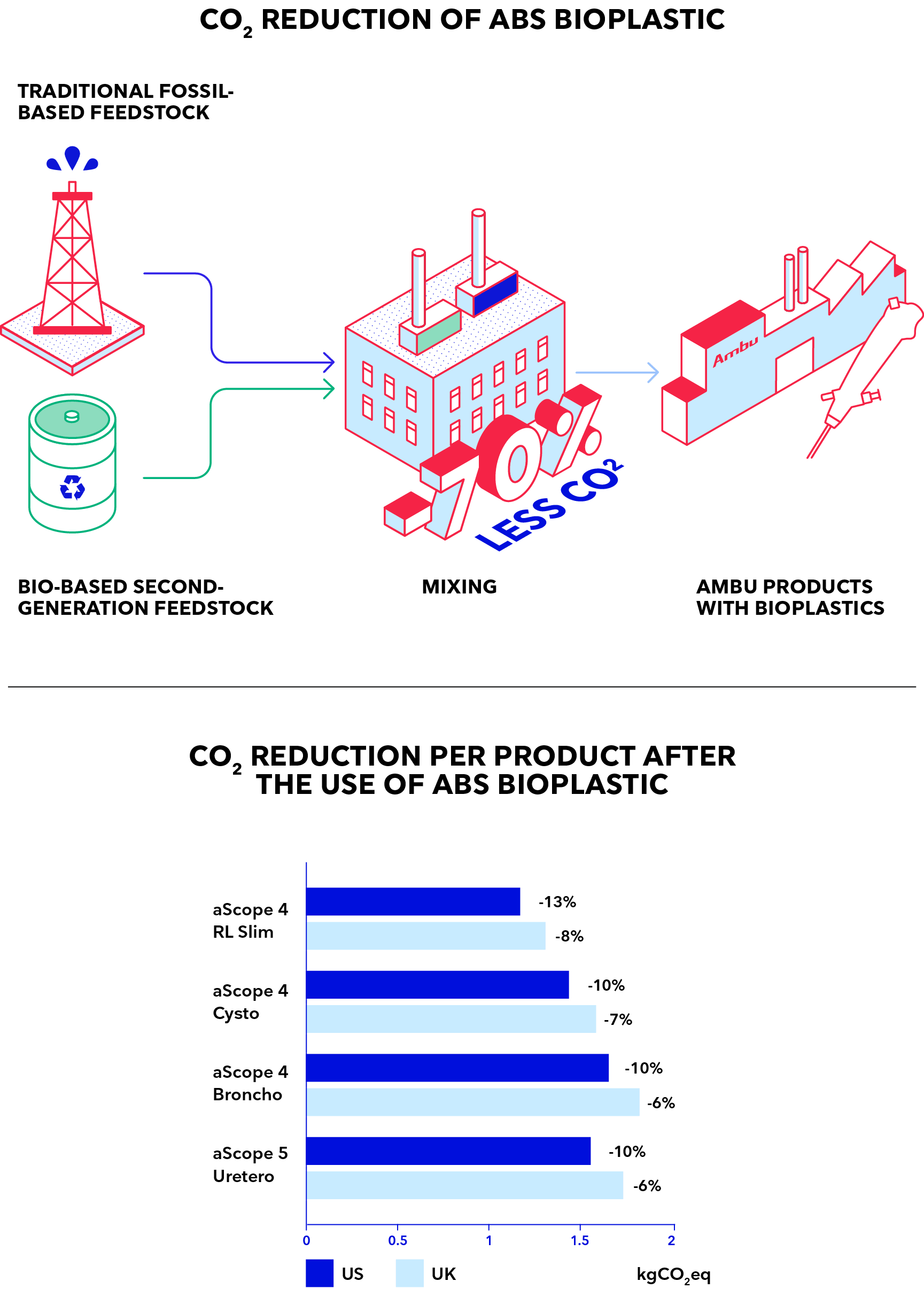
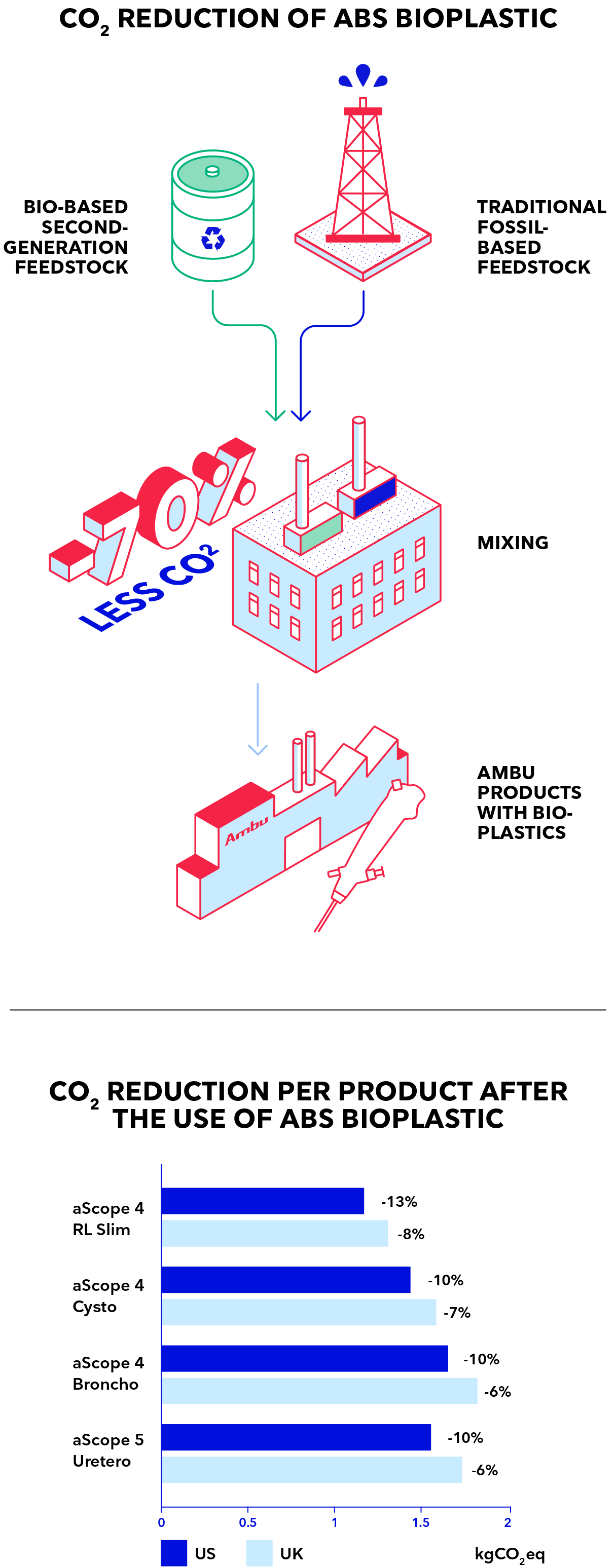
Yes, in fact, Ambu is the first company to utilise bioplastic material in the handles of our single-use endoscopes.
The ABS bioplastic material in all Ambu endoscope handles consists of 50% second-generation bio-based feedstock mixed with 50% fossil-based feedstock.
3. Does Ambu’s bioplastic material affect renewable raw materials used for food?
No, the bioplastic material used in Ambu single-use endoscope handles is second-generation bio-based feedstock, which does not affect other renewable raw materials.
This is because second-generation feedstock is sourced from by-products and waste, such as used cooking oil, which does not compete with food and agriculture production.
5. How is the percentage of bioplastic material used in Ambu handles traced?
The ABS bioplastic used in Ambu single-use endoscope handles is certified through a mass-balance approach. This approach means that renewable raw materials are introduced into the plastic production process and tracked, ensuring that the input and output are balanced.
With this approach, it is possible to verify that the second-generation feedstock has replaced an equivalent quantity of fossil-based raw materials at the start of the supply chain. When we receive the plastic, we track that the plastic is used in our endoscopes.
6. How can the carbon footprint of Ambu single-use endoscopes be further reduced?
Ambu will introduce a number of initiatives aimed at further reducing the carbon footprint of our single-use endoscopes, including:
- Bioplastic material in other parts of our endoscopes besides the handles to further reduce the footprint of our products
- A new type of bioplastic material that is not mixed with fossil-based material but instead is made of 100% bioplastic
- Expansion of the Ambu Recircle Program to incorporate more hospitals in more markets, as well as additional Ambu products, into our recycling system

7. Can Ambu single-use endoscopes be recycled?
Yes, the Ambu Recircle Program gives hospitals access to a recycling program that is designed for ease of adoption, compliance and real-world impact.

8. What happens to the recycled material from Ambu single-use endoscopes?
Devices are processed to recover plastics and metals at the optimal quality. Ambu reuses some of the recovered material in our own operations (for example, in office components and furniture). The remainder goes into established, high-value recycling streams for industrial use.
9. How does post-procedure handling affect the carbon footprints of single-use vs. reusable endoscopes?
It's true that with single-use, you dispose of the endoscope itself after each use. But it is important to consider that, unlike reusable endoscopes, single-use endoscopes do not require reprocessing after each usage, which consumes a multitude of resources, such as:
- Chemicals and water that can harm staff and the environment
- Brushes, sponges, cloths
- Personal protective equipment
At Ambu, we actively collaborate with specialists to conduct life cycle assessments, enhancing transparency and understanding of our products' environmental performance. (See question 10 for results of comparative studies.)
10. What do comparative studies say about single-use vs. reusable endoscope impact?
Scientific studies suggest that when everything is considered, the environmental impact of single-use ureteroscopes, bronchoscopes and cystoscopes is in fact equal to or less than that of their reusable counterparts. However, further research is needed to determine the full life cycle impact.
JOIN THE CIRCLE
Want to be the first to hear about environmental initiatives, and to discover opportunities to participate in pilot projects and partnerships?
Learn more about Ambu's circular approach to products and packaging